What We Call Real
Camila Urrego – What We Call Real
Perception, Environment, and the Construction of Reality
GALLERY: FOTOGRAFIENS HUS → RÅDHUSGATA 20
With the exhibition What We Call Real – Perception, Environment, and the Construction of Reality, Camila Urrego explores the boundaries between reality and fiction, the human-made and the computer-generated, and what truly belongs to us — and what belongs to the machines.
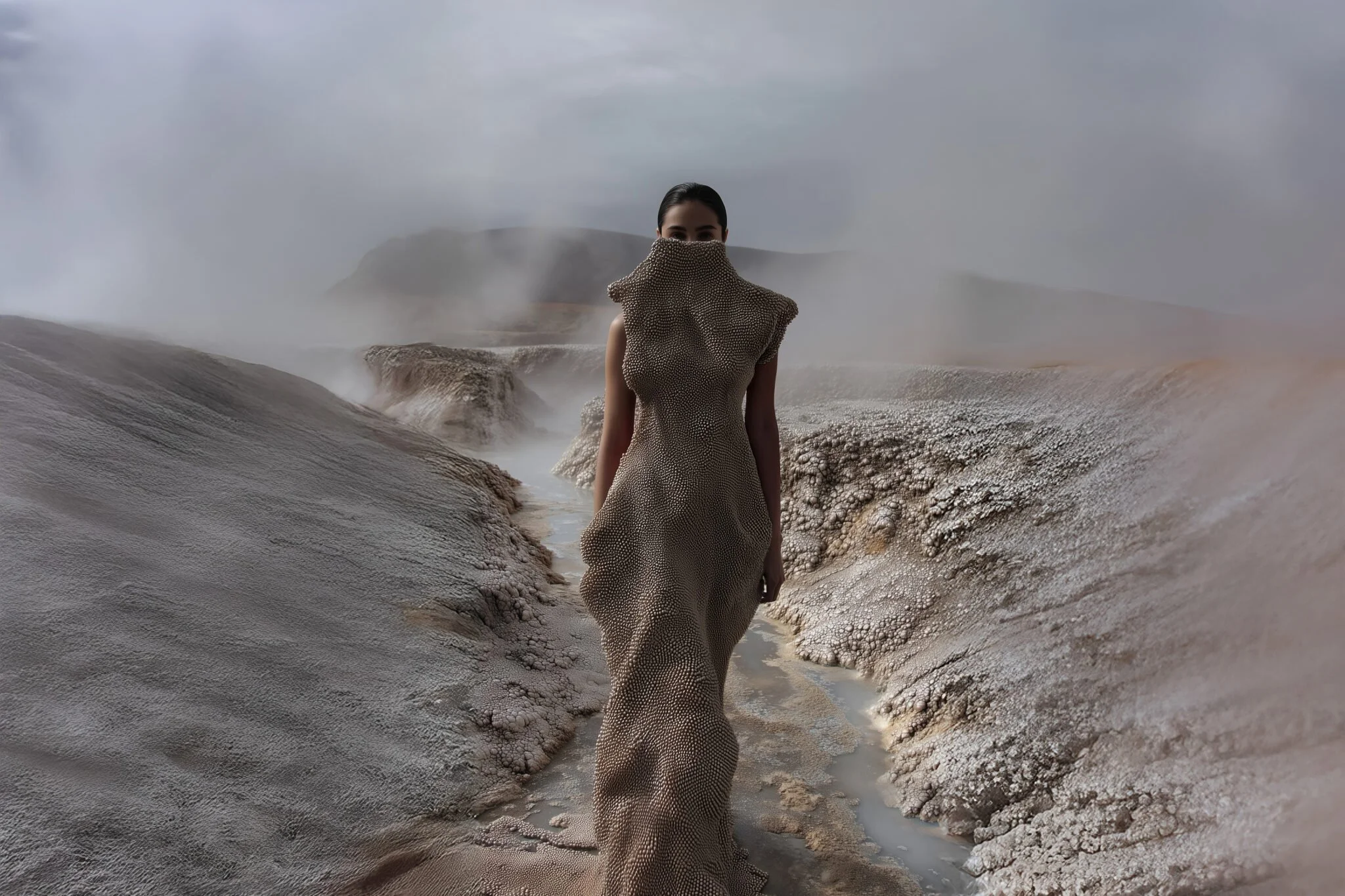
“The more I experiment with artificial intelligence, the clearer it becomes that this is not about replacing creativity, but about expanding what creativity can be.”
What We Call Real unfolds as a speculative visual inquiry into how perception, environment, and identity take shape. Rather than offering a fixed position, the project moves through a series of questions: Is reality something we observe, or something we continuously construct? And if so, where does that construction begin, and where does it end?
At the heart of the work lies a tension between media. Photography has historically been understood as capturing what is. Artificial intelligence, by contrast, generates what could be. If photography records and artificial intelligence constructs, what happens when both operate within the same image? Is the image a document, a fabrication, or something that resists both definitions?
Through constructed visual environments that combine photography and artificial intelligence, the work places the human body in shifting relationships — not in order to define how it should behave, but to observe what emerges in the encounter. What do these environments make possible? What forms of behaviour and perception arise within them? What belongs to the body, and what belongs to the system? And where do these distinctions begin to dissolve?
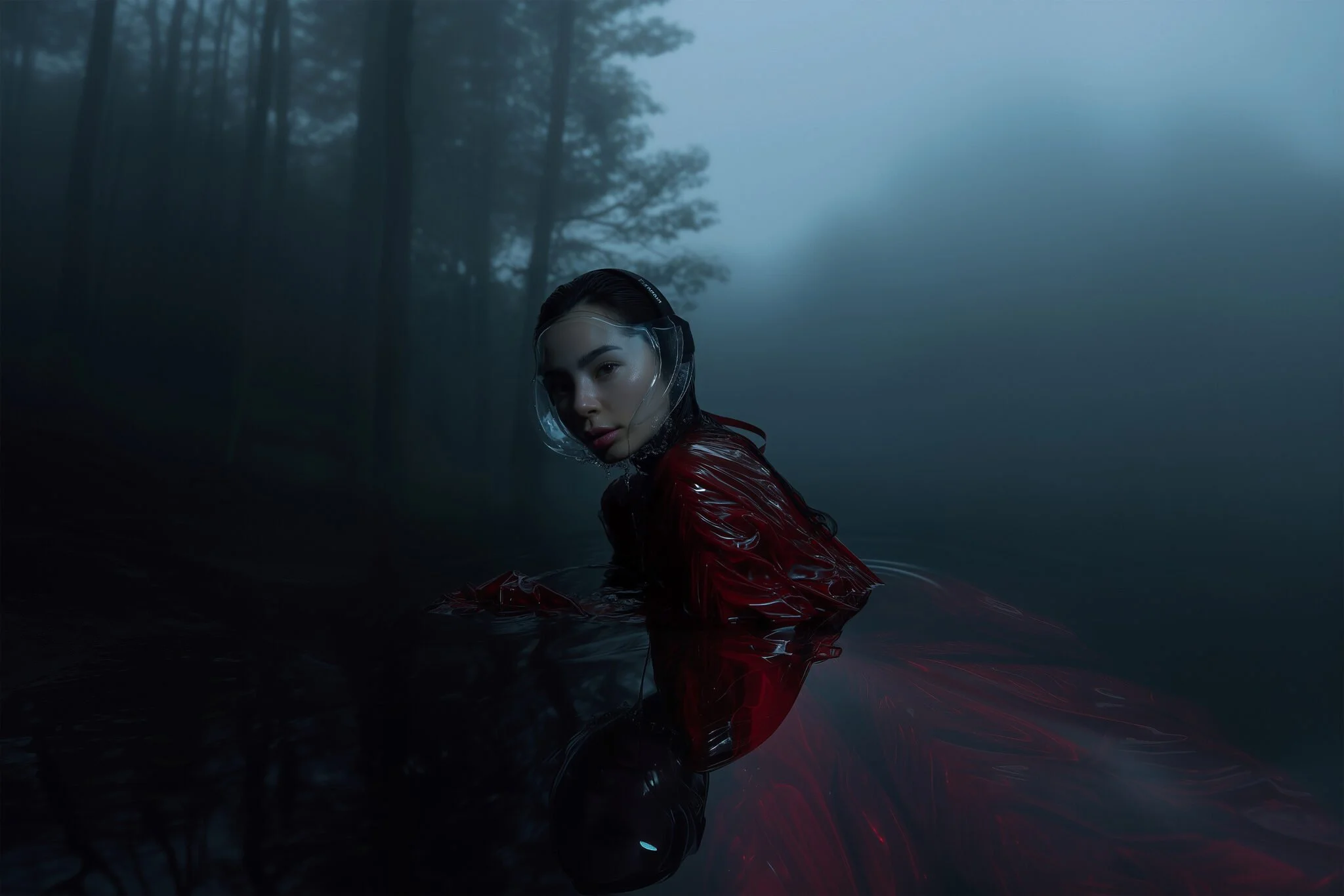
The interwoven relationship between the human being and its technological productions has long been debated and theorised, from Heidegger’s Gestell to Deleuze’s machinic assemblages and Haraway’s Cyborg. The explosion of artificial intelligence brings these debates into renewed focus and intensifies ancient polarities: human and machine, intuition and calculation, creativity and system, sensitivity and logic. Is artificial intelligence a tool that extends human perception, or does it introduce its own alien form of intelligence? And if the artist collaborates with AI, where does authorship reside: in the human, in the system, or in the interplay between them?
The project does not seek to resolve these tensions into fixed oppositions. It does not ask whether the work is human or machinic, real or artificial, expressive or calculated. Instead, it asks whether these distinctions are still relevant. What if these states are not separate, but intertwined? What if they do not oppose one another, but complement one another? What if artificial intelligence does not diminish human nature, but reveals new dimensions of it?
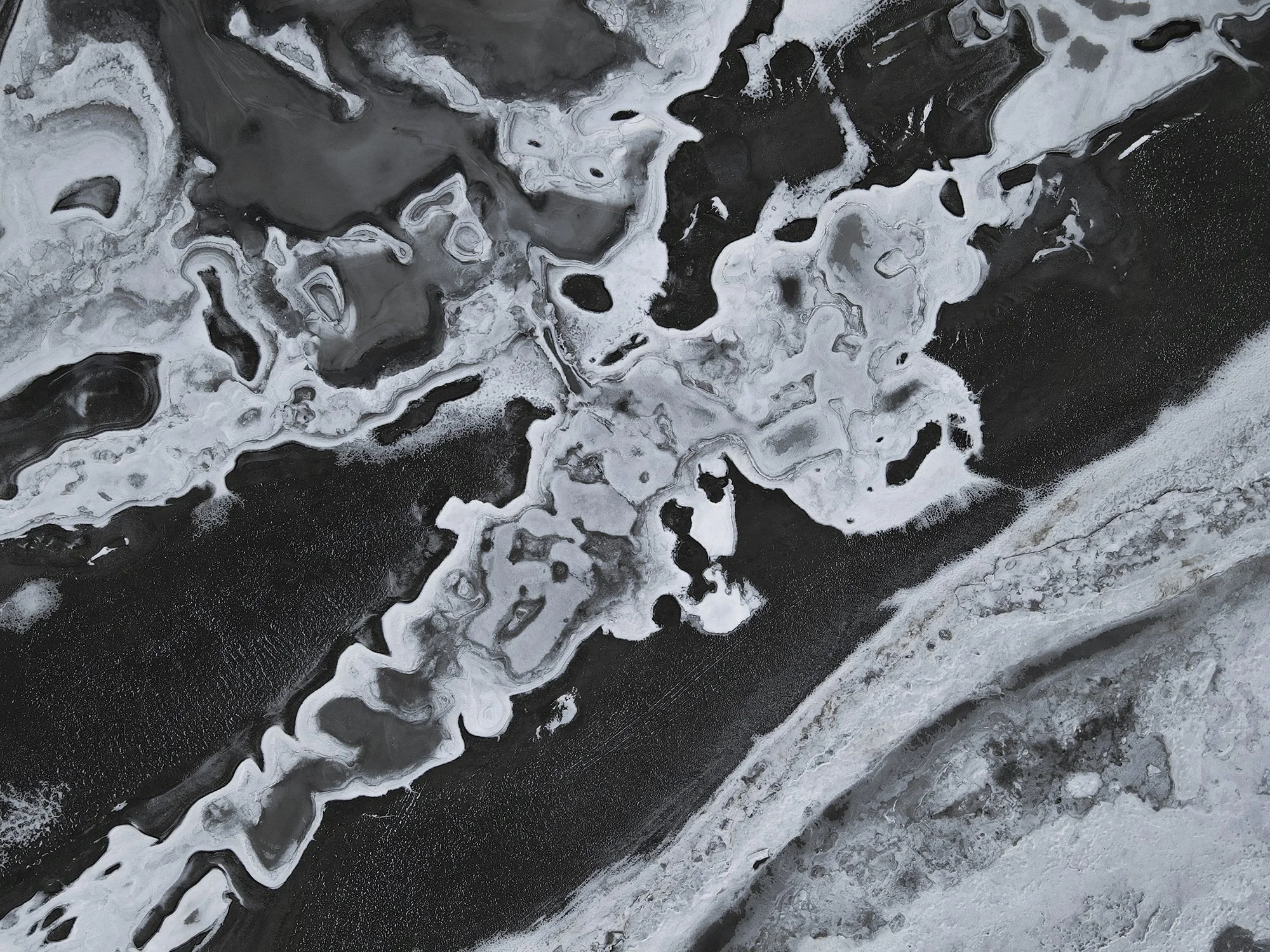
In this sense, the work operates within a field of coexistence. Human intuition and artificial intelligence are positioned as mutually dependent modes of perception and creation. The images emerge from this interplay as propositions rather than answers, inviting the viewer to remain at this threshold.
Ultimately, What We Call Real asks whether the capacity to hold contradictions within itself may be a form of expanded consciousness. If reality is not singular, stable, or universally shared, then perhaps what we call real is always in the process of becoming — shaped not only by the environments we inhabit, but also by the systems we think with and the ways we choose to see.
Biography
Camila Urrego is a photographer and visual artist with an interdisciplinary background in art, architecture, and design. She studied art at Tokyo University of the Arts, architecture and design at Universidad de los Andes in Colombia, and holds a Master’s degree in Landscape Architecture from the Oslo School of Architecture and Design (AHO), as well as a Master’s degree in Interior Architecture from the Oslo National Academy of the Arts (KHiO).
As the founder of the creative studio Camiur, Urrego works at the intersection of photography, storytelling, and artificial intelligence. She explores how the boundaries between art, architecture, fashion, ecology, and technology are shifted and reconfigured. In her practice, she develops visual and speculative environments that integrate tools from these fields in order to investigate how reality is shaped through the interplay of different systems.