Love Path in Oslo
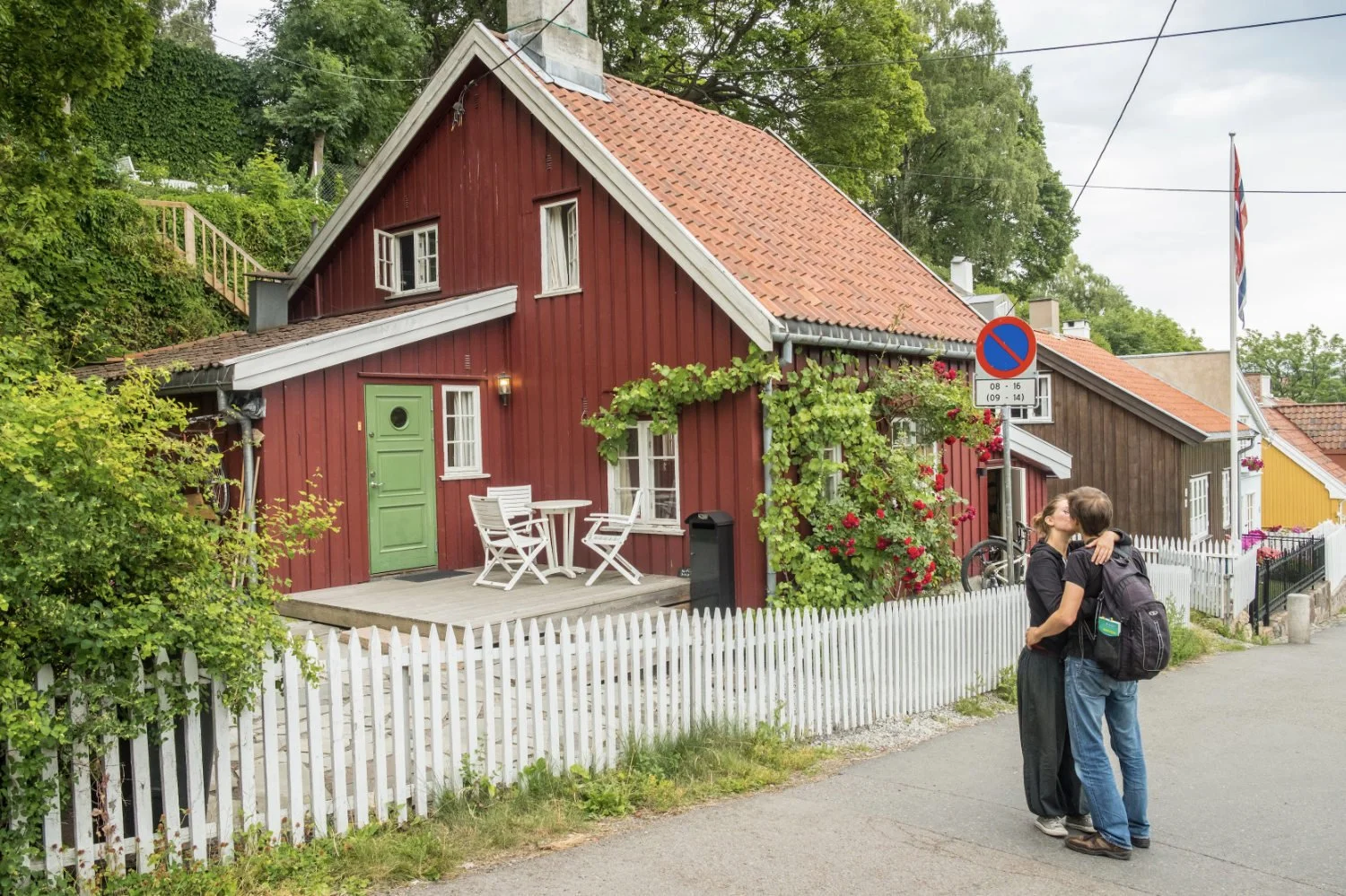
Some places in a city should never be shouted about. They work best when left in peace, like a quiet answer to the noise around them. Love Path — Kjærlighetsstien — is one of those places. It is not grand, not theatrical, not among the loudest chapters in Oslo’s story. And that is precisely why it endures as something rare in the Norwegian capital: a passage where the city lowers its voice, and where people come closer to the landscape, to history, and perhaps also to themselves.
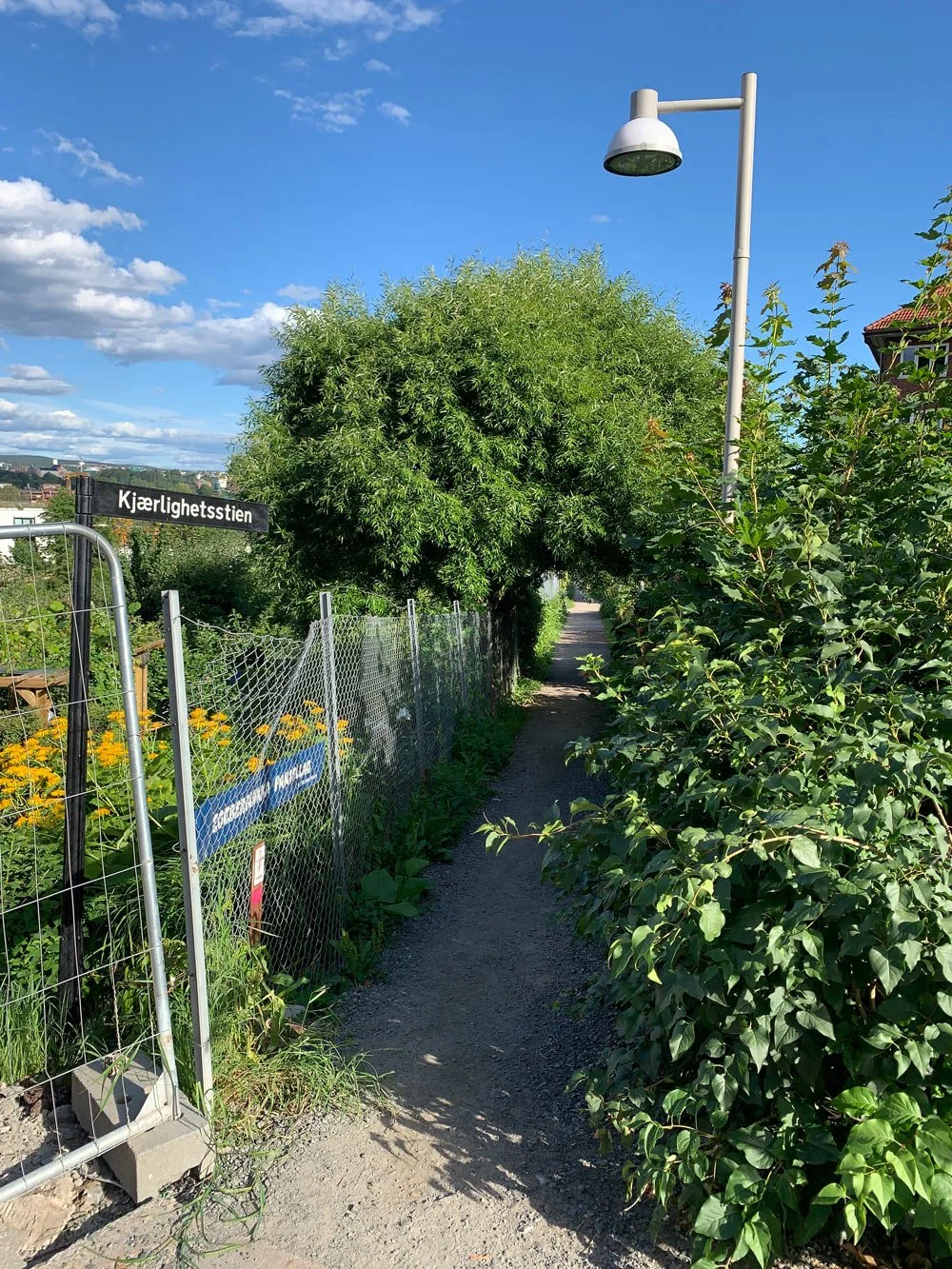
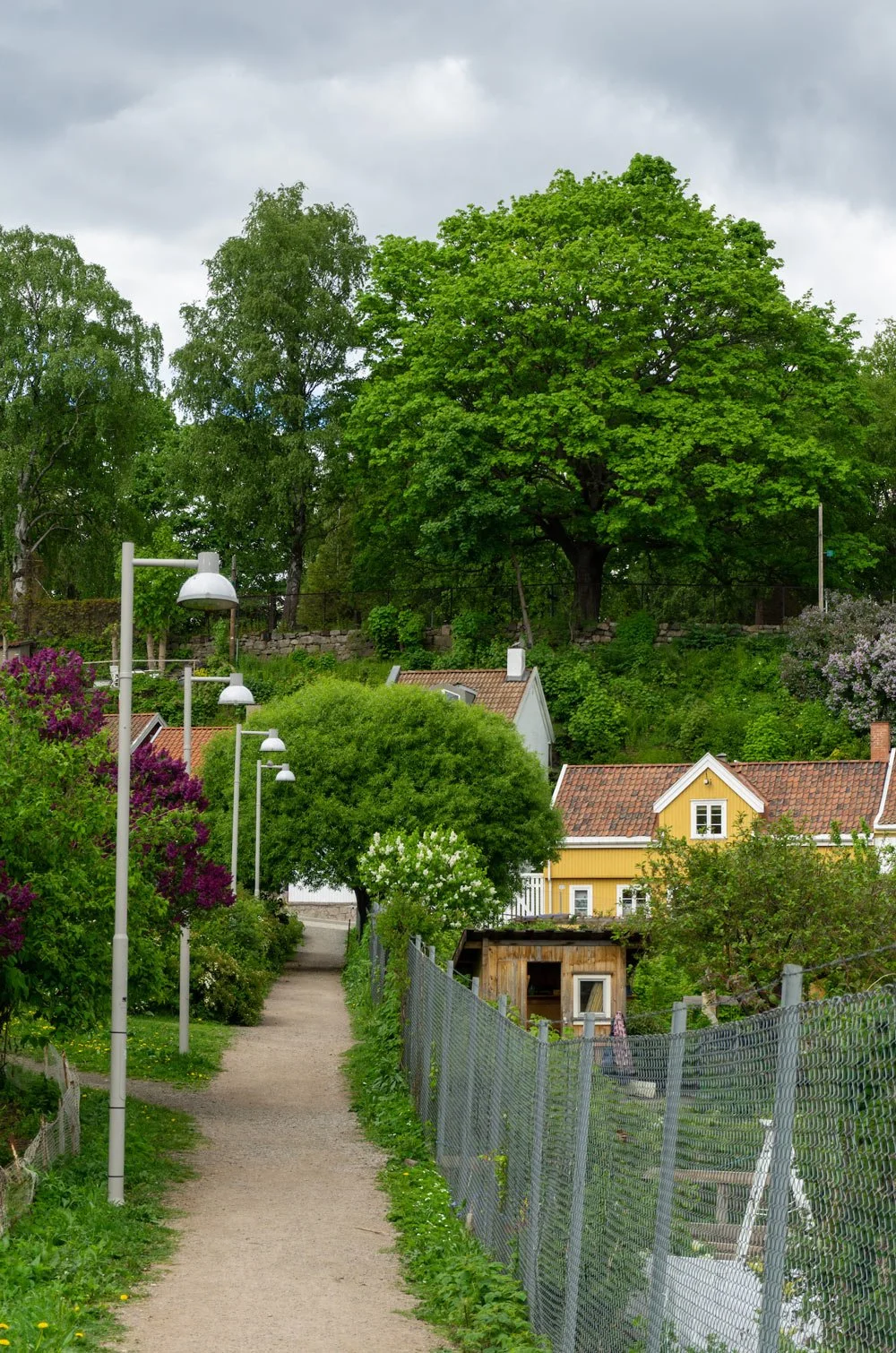
At first glance, Love Path is simply a footpath. It runs between Maridalsveien and Telthusbakken, tracing a gentle line beside the edge of Egebergløkka allotment gardens. But to describe it only in those terms is rather like describing a poem as a sequence of lines. The facts may be correct, yet they do not capture the essence.
For this is not merely a route from one point to another. It is a shift in atmosphere. A crossing between the hard and the tender, between the city as infrastructure and the city as experience. You enter the path carrying the tempo of streets and pavements on your shoulders, and you leave it feeling as though something inside you has quietened. Here, bare facts give way to something more vital: the slow, almost surprising sensation of moving through a place that never tries to impress, yet does so all the same.
Its name carries its own legend. Love Path is an old name, one with a trace of wit and a distinct air of intimacy. It suggests a place once sheltered from view, discreet enough to attract couples seeking privacy from the public gaze. Whether approached as anecdote, memory or urban folklore, the name feels entirely right. For Oslo is not built only of stone, planning decisions and transport lines; it is also built of glances, detours, whispered moments and the half-hidden places where human lives unfold beyond the obvious.
That is what makes Love Path greater than its modest length. It reminds us that the true worth of a city lies not only in its monuments, but in its intervals. In narrow passages. In green corridors that open up another rhythm. In places scaled not to spectacle, but to the human being. This human scale can never be replaced by glass facades, bold slogans or the abstractions of urban ambition.
Beside the path lies Egebergløkka, one of the city’s allotment gardens, and its presence deepens the meaning of the walk. Such places speak of work, cultivation, frugality and continuity. They remind us that even within a dense and evolving capital, the ground can remain ground — not merely a surface to be built over, but something living, tended and remembered. The neighbouring gardens lend Love Path an added resonance. One does not walk only past greenery here, but past a still-active memory of the city’s older relationship with land, labour and sustenance.
Perhaps that is why the path leaves such an impression. It offers none of the dramatic grandeur of the forests, none of the open horizon of the fjord. What it offers instead is something more subtle, and in its own way more refined: an intimate form of beauty. A kind of urban poetry. A green hush pressed delicately between buildings, history and everyday life. To understand places like this is to understand something essential about Oslo. The city is not only beautiful when it unfolds in sweeping panoramas; it is equally beautiful when it contracts, becomes local, and speaks in a more private register.
Love Path is therefore not romantic only in name. It is romantic in the deeper sense of the word: a place that gives space to mood, longing and recollection. Its beauty is not decorative but experiential. It lies in presence. In the particular feeling of being in the middle of the city and yet, somehow, slightly apart from it. As if Oslo briefly opens a hidden door and says: look — this, too, is me.
It is easy to overlook such places in an age that celebrates the large, the new and the visible. That is precisely why they deserve to be written about with seriousness. Love Path represents something invaluable in any living city: continuity, sensuousness and resistance to flattening uniformity. It reminds us that a city does not become great simply by expanding. It becomes great by preserving places where human feeling still sets the scale.
And that, in the end, is the quiet authority of Love Path. It is not a curiosity, nor a sentimental footnote, but a concentrated expression of Oslo itself — its layers, its restraint, its understated elegance. Here, history, greenery and lived experience meet in a narrow passage and become more memorable than many broader, louder streets. There is no excess here. Only precision. And often, that is where beauty lives most fully.
In all its modesty, Love Path stands as proof that Oslo can be intimate without becoming sentimental, beautiful without self-consciousness, and historical without turning static. It remains there as a quiet promise between Maridalsveien and Telthusbakken: that the city still contains places where time slows, and where something as simple as a path can make the world feel, for a brief moment, gentler.