Tigeren (The Tiger)
Standing proudly at Jernbanetorget in front of Oslo Central Station, The Tiger sculpture is one of the most iconic and frequently photographed landmarks in the Norwegian capital.
This magnificent 4.5-meter bronze monument, masterfully crafted by renowned Norwegian sculptor Elena Engelsen, was unveiled in 2000 as a gift to the city to commemorate its millennium anniversary. Capturing a lifelike, stalking feline, the sculpture serves as a bold visual anchor for travelers arriving in the heart of Oslo.
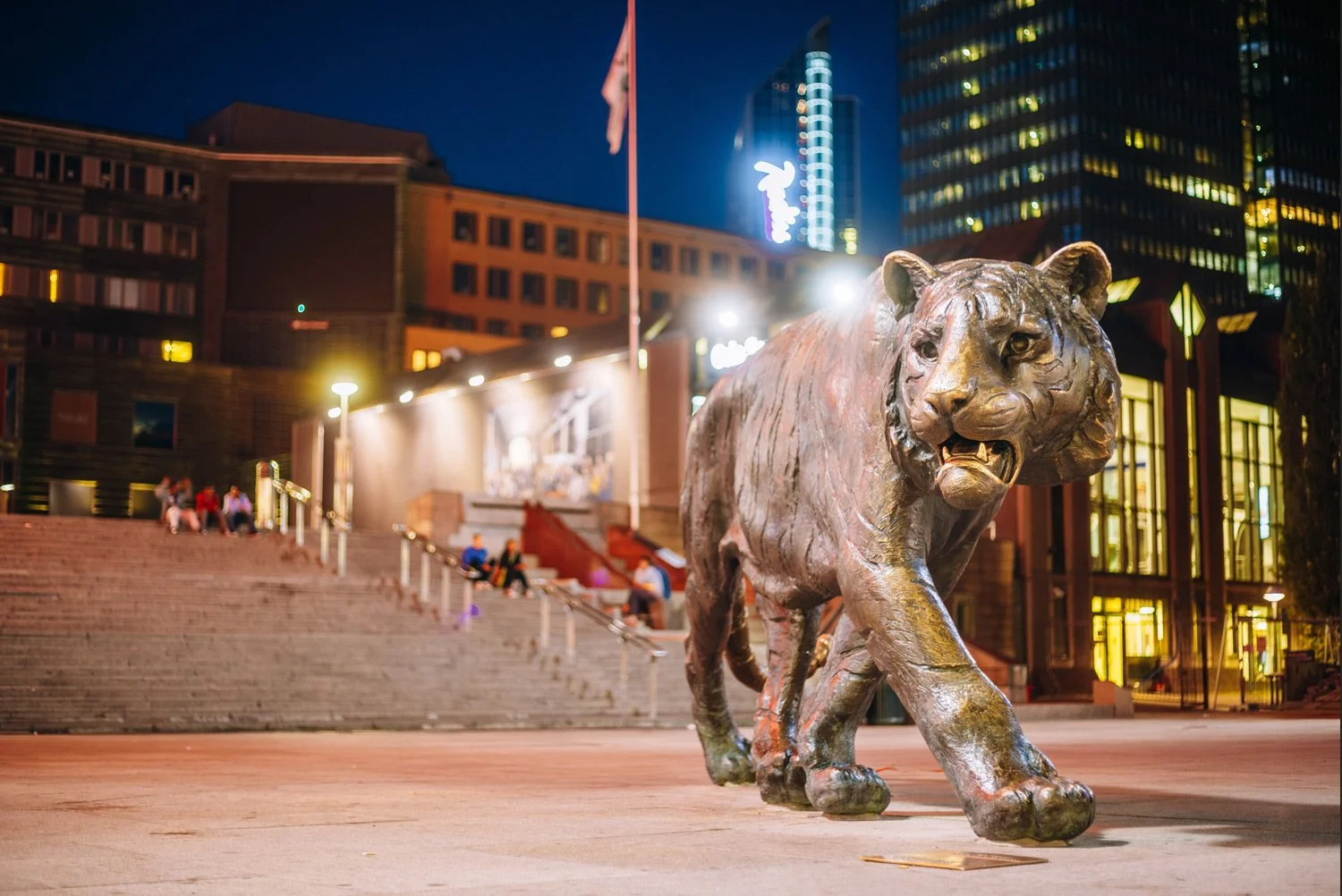
The Tiger is not just a popular photo spot; it is also a direct nod to Oslo’s famous nickname, "Tigerstaden" (The Tiger City). This moniker is widely believed to have originated from an 1870 poem by Norwegian writer Bjørnstjerne Bjørnson, where he described a fierce battle between a horse (representing the safe countryside) and a tiger (representing the dangerous, cold city). Over the decades, the negative connotation faded, and the tiger evolved into a symbol of Oslo's vibrant, energetic spirit.
Today, visitors of all ages can be seen climbing, sitting on, or posing next to the massive statue, making it one of the most beloved meeting points in Oslo.
From Moniker to Monument
The sculpture is a direct physical manifestation of Oslo’s famous nickname, Tigerstaden (The Tiger City). The term was originally coined in 1870 by the Nobel Prize-winning Norwegian poet Bjørnstjerne Bjørnson in his poem Sidste Sang (Last Song). In Bjørnson's era, the tiger served as a dark metaphor for a raw, untamed, and potentially perilous urban environment, juxtaposed against the safety of the rural "horse city".
Over the decades, Oslo underwent a profound cultural evolution. The intimidating symbol was completely reimagined by its citizens, shifting from a cautionary tale into a badge of pride. Today, the majestic bronze beast no longer warns of danger; rather, it celebrates the vibrant energy, cultural resilience, and dynamic international spirit of modern Oslo.
The Ultimate Meeting Point
Beyond its deep historical symbolism, the sculpture functions as the ultimate urban geographic marker. For locals and international tourists alike, "meeting by the tiger" is an omnipresent phrase, cementing the artwork as a functional centerpiece of Oslo's daily civic life
How to get to the tiger
Finding the iconic Tiger sculpture is incredibly straightforward, as it sits at the absolute focal point of Oslo's transport network.
📍 Exact Location
The Tiger is positioned right in the middle of Jernbanetorget, the public square directly outside the main western entrance of Oslo Central Station (Oslo S).
🚊 Getting There by Public Transit
Because it is located at the city's primary transit hub, almost every major transport line in Oslo will drop you off just steps from the sculpture:
By Train: Take any regional, local, or Flytoget Airport Express train to Oslo S. Walk out of the main station doors facing the city center, and the Tiger will be directly in front of you.
By Metro (T-bane): Ride any of the city's six metro lines to the Jernbanetorget station. Follow the signs up toward the surface and the central station entrance.
By Tram or Bus: Dozens of routes stop directly at the Jernbanetorget plaza. Look for tram lines 11, 12, 17, 18, or 19, or any central bus route.
🚶 Walking from the City Center
If you are already exploring downtown Oslo, simply walk to the easternmost end of Karl Johans gate (the main pedestrian shopping street). Follow it all the way to the end where it opens up into the square, and you will see the majestic bronze beast greeting you.
Are you trying to plan a route from a specific hotel or location in Oslo? If so, share your starting point and I can give you the exact line numbers or walking directions!