Kampen
Oslo’s Wooden Village on the Hill
Damstredet and Telthusbakken receive most of the attention when guidebooks discuss Oslo’s wooden houses. Kampen offers something broader and more lived-in: an entire hillside neighbourhood where small timber homes, brick apartment buildings, gardens, local cafés and long views across eastern Oslo form a coherent urban landscape.
Kampen developed as a wooden suburb during the city’s 19th-century expansion. Fire, redevelopment and later building campaigns changed parts of the district, but many streets still preserve the scale and irregularity of the older settlement. Painted houses in ochre, green, red and pale blue sit close to narrow pavements; stairways and sloping lanes reveal how the neighbourhood conforms to the hill rather than imposing a rigid plan upon it.
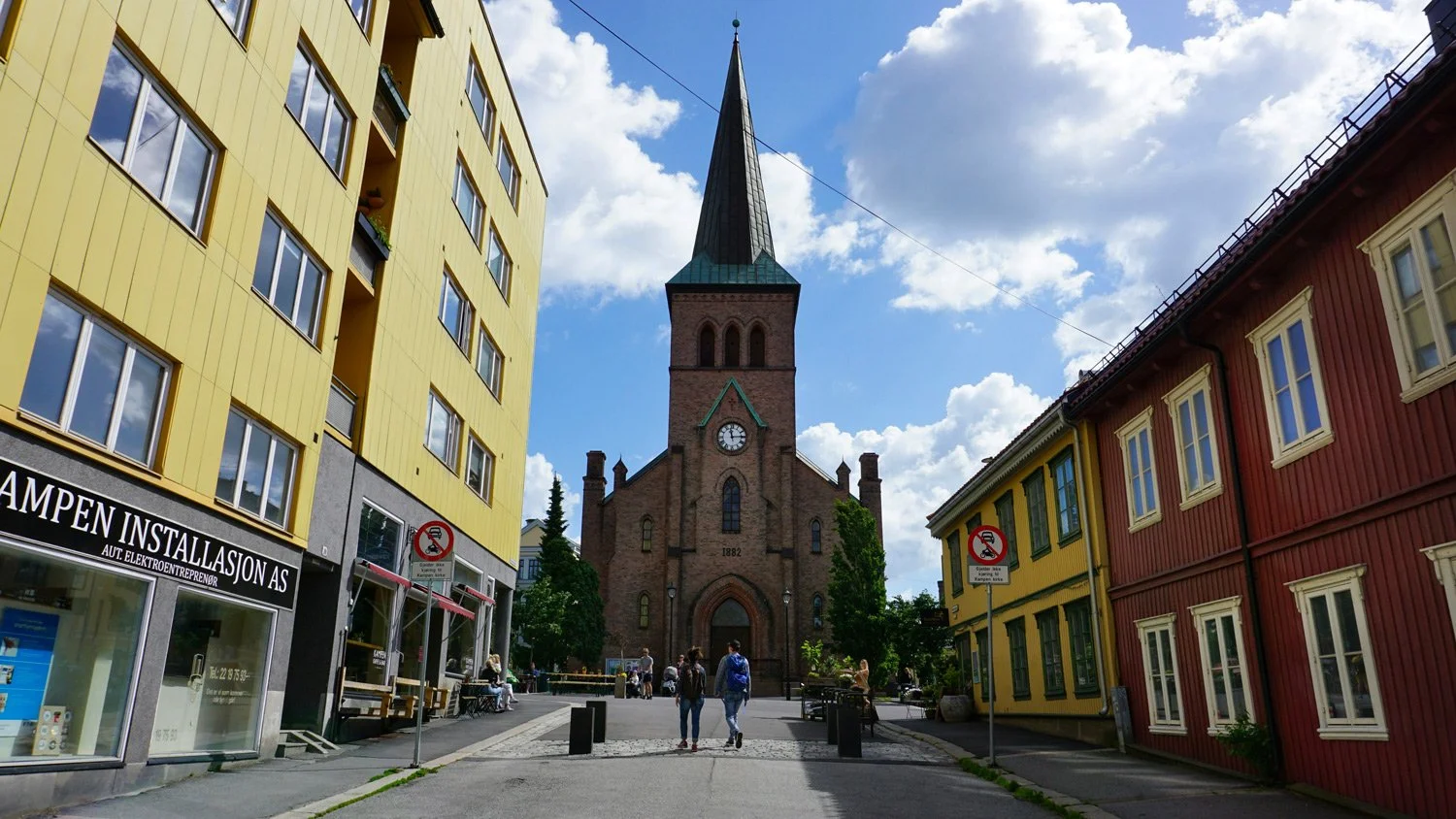
Begin around Kampen Church and wander through Bøgata, Normannsgata, Nannestadgata and the smaller connecting streets. The appeal is not a single monument but the accumulated detail: old doors, compact gardens, unexpected sightlines and the transition from dense city blocks to Kampen Park. From the higher ground, Oslo opens below in a patchwork of rooftops, church towers and newer development.
Kampen remains a residential neighbourhood, not an outdoor museum. That is precisely why it feels authentic. Visit quietly, avoid photographing directly into homes and use local cafés and restaurants as part of the experience rather than treating the streets merely as a backdrop.
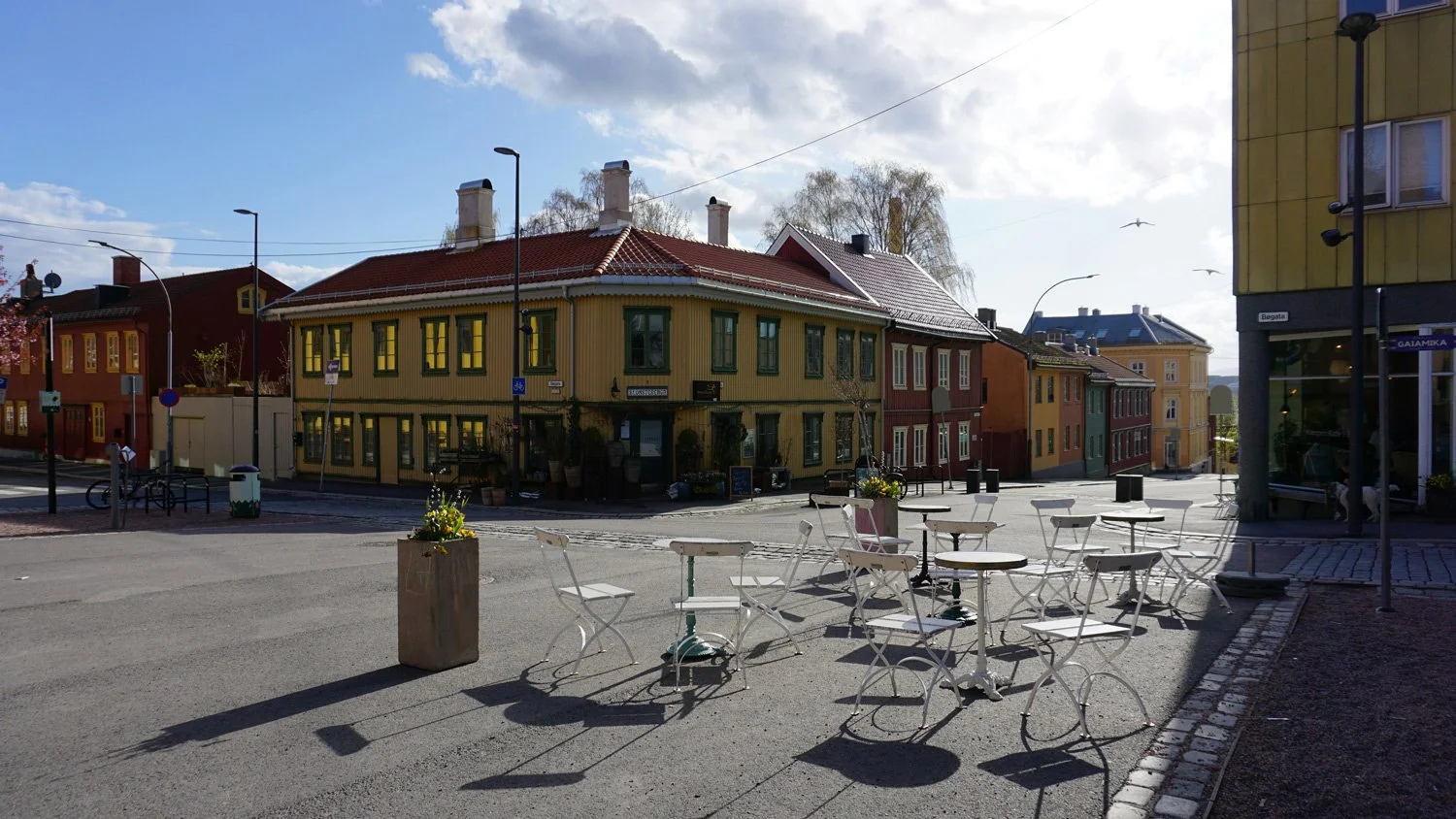
Plan your visit: Take the metro to Tøyen and walk uphill through the neighbourhood, or approach from Ensjø and finish at Tøyen. A relaxed circuit takes 60 to 90 minutes. Kampen combines naturally with the Botanical Garden, Tøyen, Vålerenga or the medieval ruins in Gamlebyen. The historical context of Oslo’s wooden suburbs is outlined by the Oslo City Encyclopedia.